New research guide: The Confidence Economy, how AI is changing fashion commerce.
Fashion Commerce
·
September 8, 2026
The Merchandising Problem AI Solves That No One Talks About: Dead Inventory
The fashion industry produces 30-40% more inventory than it sells. AI outfit curation surfaces dead SKUs by placing them in complete looks alongside bestsellers — a merchandising strategy no team can execute at catalog scale.
Mehul Agarwal, Founder & CEO
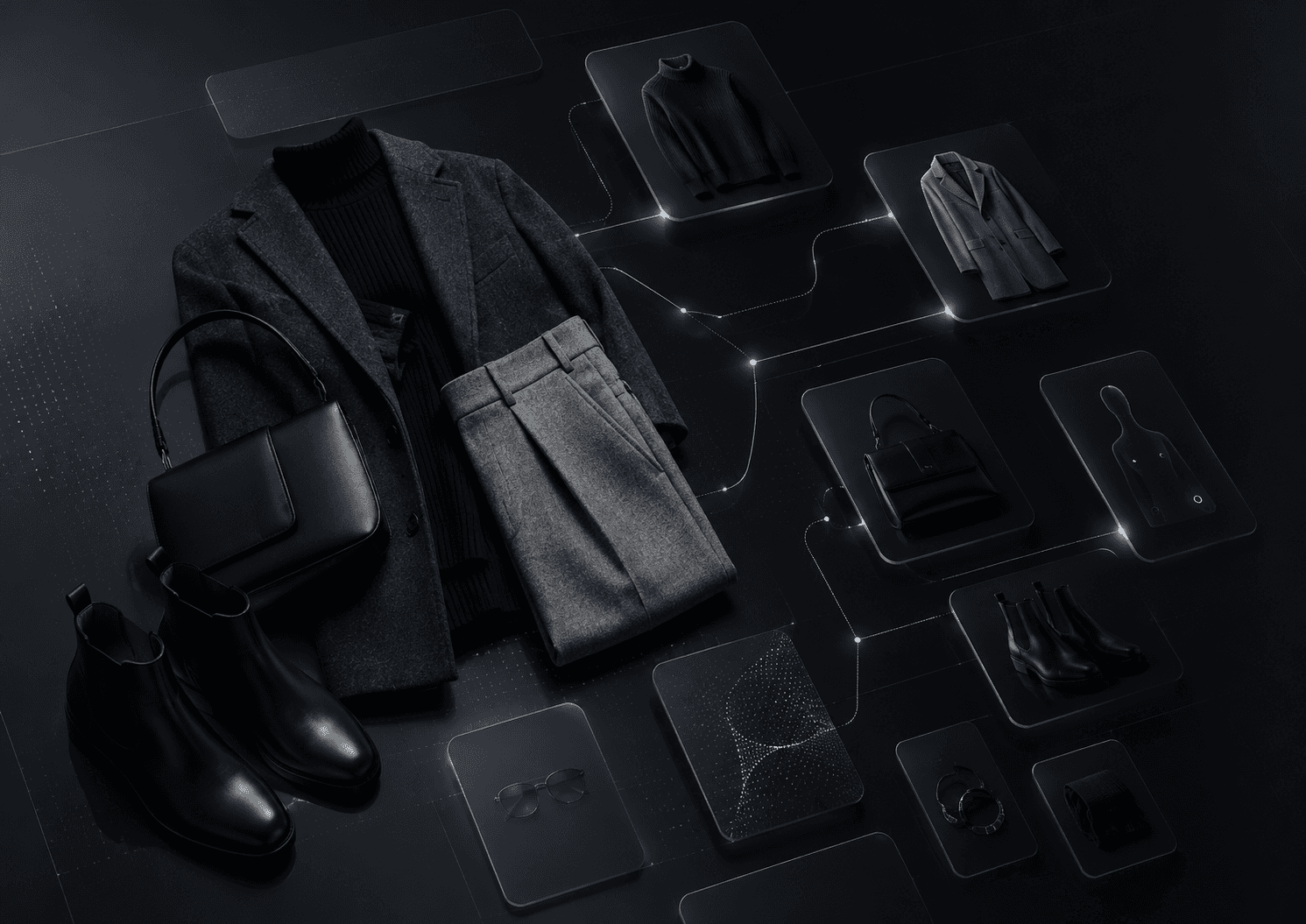
Every conversation about AI in fashion ecommerce focuses on the same set of outcomes: higher conversion, better personalization, lower return rates. These are real and worth pursuing. But there is a problem that sits upstream of all of them, costs fashion brands more than any of the above, and is almost never named in the AI conversation: dead inventory.
The fashion industry produces 30 to 40% more inventory than it sells, according to research compiled by AI fashion industry analyst Tommaso Maria Ricci. Brands destroy billions in deadstock every year. On July 19, 2026, the EU's Ecodesign for Sustainable Products Regulation banned the destruction of unsold apparel, footwear, and accessories for large companies, with medium-sized companies following in 2030. The era of quietly writing off unsold inventory is ending. The brands that do not solve the dead inventory problem structurally will face both the margin cost and, increasingly, the regulatory cost.
AI outfit curation is the most underutilized tool for solving it.
What dead inventory actually costs
A dead stock ratio — dead stock value divided by total inventory value — below 5% is considered healthy, according to inventory management benchmarks. Between 5% and 10% is a warning sign. Above 10% indicates serious margin damage.
The cost of dead inventory is not only the write-down. It is the working capital locked up in units that are not turning. It is the warehouse space consumed by product that is not earning its keep. It is the markdown depth required to move it when the season ends — markdowns that can reduce margin by 40 to 60% per unit. And for fashion brands with seasonal collections, it is the compounding problem of carrying last season's unsold stock while buying into next season's, which multiplies the capital pressure at exactly the moment cash flow is tightest.
H&M reduced overstock by 30% using AI inventory tools, according to Alhena AI's 2026 fashion ecommerce report. That 30% figure is not primarily a forecasting improvement. It is a sell-through improvement — more inventory turning at full price because the right products were surfaced to the right shoppers at the right moment.
The visibility problem no one measures
The standard diagnosis of dead inventory focuses on buying decisions: brands overbought, or they bought the wrong mix, or they missed a trend. This is true but incomplete.
A significant portion of dead inventory is not dead because there is no demand for it. It is dead because it was never shown to a shopper in a context that made its value visible.
A structured trousers SKU in olive green that is not moving is not necessarily a product failure. It may simply be a product that has never been shown alongside the right shirt and loafers in a complete look, for a specific occasion the shopper was already shopping for. Shown in a grid of individual products organized by category, it reads as a niche choice requiring styling knowledge the shopper does not have. Shown as part of a complete Saturday lunch look in a styled outfit recommendation, it reads as an obvious, desirable purchase.
The presentation layer of product discovery is where a meaningful percentage of slow-moving inventory fails, not at the buying or trend-forecasting stage. This is the part that AI outfit curation addresses directly.
How outfit context changes sell-through
John Varvatos saw a 70% AOV lift from AI outfit completion, according to data compiled by FindMine. Victoria Beckham reported a 20% AOV increase with Alhena AI recommendations. These are the headline numbers. The less-discussed outcome behind them is what happened to underperforming SKUs.
When an AI styling engine builds complete looks from a brand's full catalog, it does not sort products by current sell-through rate and surface only the bestsellers. It builds outfit combinations that work together aesthetically and contextually, drawing from across the catalog. A slow-moving piece that completes a look well will appear in recommendations alongside fast-moving pieces. The shopper who would never have navigated to that piece through category browsing sees it in context and buys it because the outfit tells her exactly how it works.
This is not a discount or a markdown. It is a context change. The product's price is unchanged. Its position in a relevant, styled look is what changed. That context change is the mechanism by which AI outfit curation improves sell-through on inventory that category-based discovery was failing.
The math on this is significant. A brand with $500,000 in slow-moving inventory at a 30% average markdown requirement faces a $150,000 margin loss on clearance. If AI outfit curation can move 20% of that inventory at full price before it reaches markdown, the saving is $30,000 in recovered margin — not from selling more, but from selling what is already there in a way that makes it desirable without a price reduction.
Why human merchandising teams cannot solve this at scale
The insight that context changes conversion is not new. Human visual merchandisers have understood it for decades. The problem is execution at catalog scale.
A merchandising team can curate a homepage, a lookbook, a seasonal editorial, and a handful of collection pages. They can style fifty looks per season with deliberate thought and strong visual execution. What they cannot do is maintain 500 or 5,000 simultaneously active outfit combinations across a catalog of hundreds of SKUs, updated in real time as inventory levels change and new pieces are added.
The result is a predictable pattern. The editorial and homepage real estate goes to bestsellers and new arrivals, because those are the safe choices and the high-effort curation work is limited. Slow-moving inventory sits in category pages that shoppers rarely navigate to, shown as individual products with no styling context. The human team's curation capacity is rationed to the inventory that needs it least, and the inventory that most needs contextual presentation gets none of it.
AI outfit curation operates across the full catalog without the capacity constraint. Every SKU can be placed in outfit combinations. Slow-moving inventory can be systematically surfaced in styled looks alongside fast-moving pieces, at a scale and consistency that no merchandising team can match. The brands that have deployed this capability report sell-through improvements not as a side effect but as a designed outcome.
The regulatory dimension brands are not planning for
The EU's ESPR regulation banning destruction of unsold apparel is not an abstract future concern. It is in effect for large companies now and will apply to medium-sized companies in 2030. Brands that were previously able to write off deadstock through quiet destruction no longer have that exit. The inventory problem becomes a compliance problem.
This changes the calculus on AI merchandising investment. The question is no longer only "what is the ROI of surfacing slow-moving inventory more effectively?" It is also "what is the cost of holding inventory that cannot be legally destroyed and is not selling?" The answer to the second question makes the answer to the first significantly more compelling.
The brands that build AI-powered sell-through capability now are building a structural solution to a problem that is only going to become more expensive to ignore. Slower-moving inventory is not a merchandising edge case. It is a category-wide problem with a regulatory timeline attached to it.
Book a demo to see how Elara's AI styling engine surfaces your full catalog — including slow-moving inventory — in outfit context that converts without markdowns.
Keep reading

Peak Season, Compliance, Shopify
Selling to the EU This Christmas? The GPSR Checklist for Shopify Fashion Brands (2026)
What the EU General Product Safety Regulation means for Shopify fashion brands shipping Christmas orders to the EU: product page information, the EU responsible person, labels, accidents and recalls.

Peak Season, Shopify, Omnichannel
After the Last Shipping Day: A Christmas 2026 Local Pickup and Delivery Playbook for Shopify Fashion Brands
How Shopify fashion brands can keep selling physical products after the Christmas shipping cutoff, with pickup in store, local delivery zones and Google's pickup today annotation.

Peak Season, Accessibility, Conversion
Black Friday 2026 Accessibility Check: What the European Accessibility Act Means for Shopify Fashion Stores
What the European Accessibility Act asks of online stores, and a five-week plan to fix sale prices, swatches, size charts, pop-ups and forms on a Shopify fashion store before Black Friday.