New research guide: The Confidence Economy, how AI is changing fashion commerce.
Returns, Retention, Strategy
·
Holiday Returns 2026: How Shopify Fashion Brands Can Turn Returns Into January Exchanges
A pre-Black Friday playbook for fashion brands on Shopify: one clear holiday return window, easy gift returns, an exchange-first flow and January stock planning.
Mehul Agarwal, Founder & CEO

Quick answer: Holiday returns are a predictable second wave for fashion brands, so plan them before Black Friday on November 27, 2026, not in January. Publish one clear holiday return window that covers gifts bought from BFCM onwards, make gift receipts and gift returns easy, steer returns towards exchanges and store credit with a better offer than a refund, and keep core sizes in stock for January exchanges. Then use the returns data to fix sizing, product pages and styling before next season.
A fashion brand that does well in November and December can pay for it twice: once in fulfilment and again in returns. Gifts in the wrong size, colours that do not suit the recipient, and party outfits that did not work all come back in late December and January. Brands that plan for this keep more of the revenue as exchanges and store credit. Brands that do not can find their January cash flow and inventory tied up in a pile of refunds.
This playbook covers the holiday return policy, the exchange-first flow, what to do with January inventory, and how to cut avoidable returns before they happen. If you are rewriting your return policy for the whole year, read our guide to writing a fashion return policy that reduces returns first.
Key dates for the 2026 holiday returns season
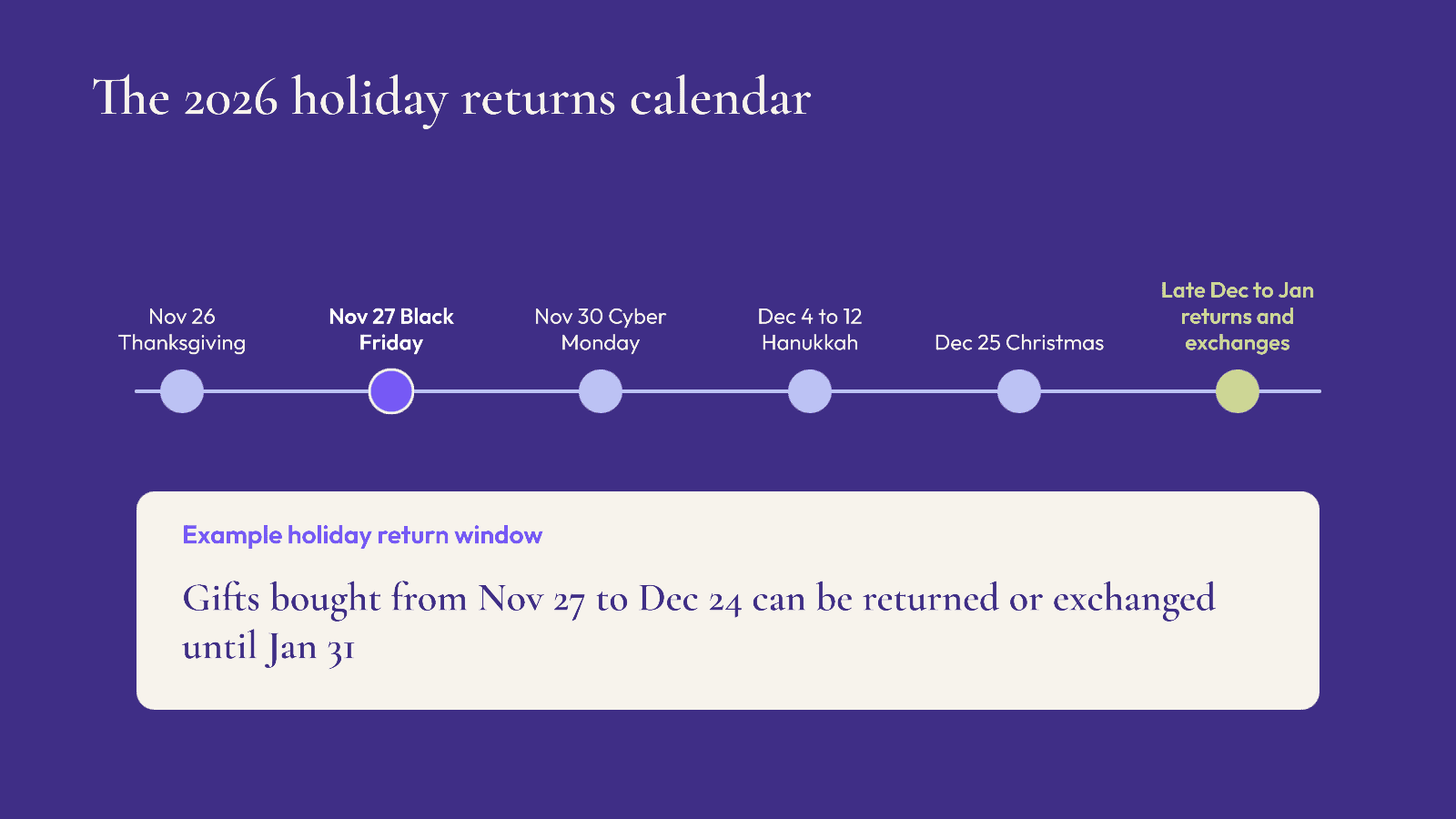
Thursday, November 26: US Thanksgiving.
Friday, November 27: Black Friday. If you run BFCM promotions, your holiday return window should cover purchases from this date.
Monday, November 30: Cyber Monday.
December 4 to 12: Hanukkah, beginning at sundown on December 4.
Friday, December 25: Christmas.
Late December into January: returns and exchanges, alongside January sales.
Step 1: Set one holiday return window and say it everywhere
An extended holiday window removes a reason to hesitate, especially for gift buyers.
Pick a clear rule: for example, "Gifts bought from November 27 to December 24 can be returned or exchanged until January 31." Choose dates that fit your margins and stock cycle.
Put it on the product page: a short line near Add to cart is more useful than a link in the footer.
Repeat it at checkout and in the order confirmation email.
Brief your support team: give them the exact dates and the exceptions, such as final-sale items, so answers stay consistent.
Step 2: Make gift returns easy for the recipient
The person returning a gift is not your customer yet, but they can become one.
Offer gift receipts or gift-mode orders: let the buyer add a gift note and hide prices on the packing slip.
Let recipients start a return without the buyer's details, using an order number or gift code, through your returns app or portal.
Default gift returns to store credit or an exchange, so the recipient picks something they like and the revenue stays with you. Be clear about any refund option so the experience stays fair.
Step 3: Design an exchange-first returns flow
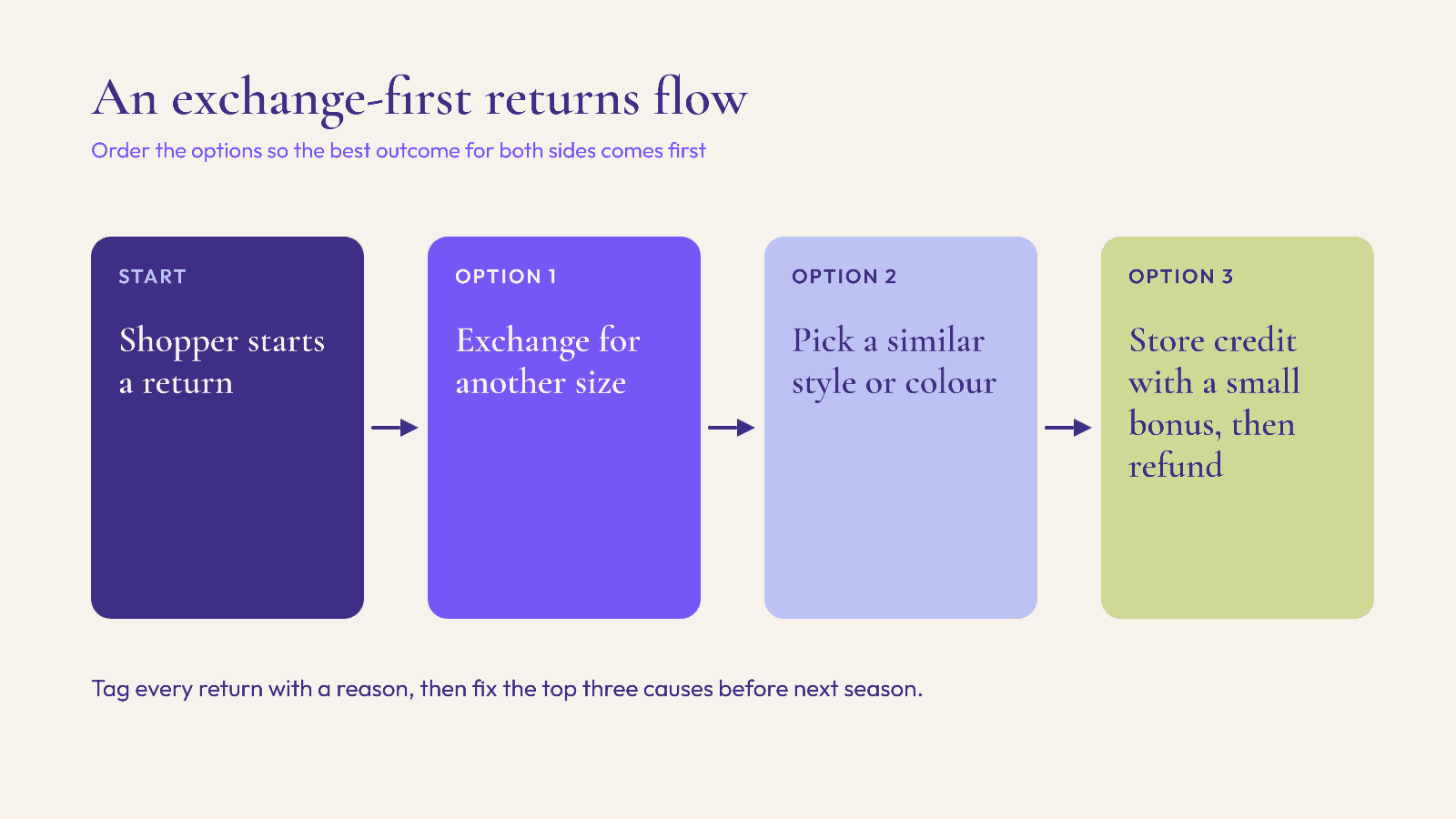
The order of options in your returns portal shapes what shoppers choose.
Show "exchange for a different size" first. For fit returns, this is often what the shopper wants anyway.
Offer a small bonus for store credit. A bonus on credit, such as free shipping on the next order or a modest top-up, can make credit more attractive than a refund. Choose a bonus your margins can carry.
Suggest alternatives, not just the same item. If a dress did not suit the recipient, show two or three similar styles in other colours or cuts.
Make instant exchanges possible where you can, shipping the replacement before the return arrives for trusted customers.
Step 4: Plan January inventory around exchanges
Protect core sizes. Hold back some stock in your best-selling sizes of hero products so January exchanges do not stall.
Restock fast. Process returns quickly and put sellable items back on the site, so they can be sold in January sales rather than sitting in a back room.
Bundle slow returns into looks. Pair returned pieces with best-sellers in complete outfits for January, rather than marking everything down.
Step 5: Use the data to prevent next season's returns
Returns tell you what your product pages failed to say.
Tag every return with a reason: too small, too big, colour different from photos, not as expected, gift not wanted.
Fix the top three causes before your next peak: update size notes, add model measurements, reshoot misleading colours, and add fit guidance to product descriptions.
Help shoppers choose better before they buy. Some fit and style returns start with uncertainty: "Will this suit me?", "What do I wear it with?" Answering those questions at the moment of purchase can reduce the number of "not as expected" returns.
How Elara helps reduce avoidable returns
Elara for Commerce is an AI shopping assistant for fashion brands on Shopify. It talks with shoppers about the occasion, their style and fit, builds complete looks from your live catalogue, and offers virtual try-on so shoppers can see an outfit before they buy. Every styling conversation is attributed to revenue, and the merchant portal shows the occasions shoppers are shopping for. As industry benchmarks, Neuwark (2026) reports a 4x higher conversion rate with AI shopping assistants and Rep AI (2025) reports 25% higher average order value. Plans start at $399 a month, with a 30-day free trial and no contracts. Book a demo before Black Friday to have it live for the gifting season.
FAQ
When should a fashion brand start its holiday return window?
Start it from the first big gifting date you care about, usually Black Friday, which falls on November 27, 2026. That way gifts bought early are still returnable in January.
How long should a holiday return window be?
Long enough to cover the post-Christmas period, often until the end of January, but the right length depends on your margins and stock cycle. The key is to state the exact dates clearly.
How do I encourage exchanges instead of refunds?
Show the exchange option first in your returns portal, offer a small bonus for choosing store credit, suggest alternative styles, and keep popular sizes in stock so exchanges can be fulfilled quickly.
Should gift returns get store credit or a refund?
Store credit or an exchange is a sensible default for gift returns because the recipient did not pay. Whatever you choose, state it clearly in your policy and gift receipt so there are no surprises.
How can I reduce holiday returns before they happen?
Improve size guidance and photos, add fit notes to product pages, and help shoppers choose with confidence at the moment of purchase, for example with styling advice and virtual try-on.
Switching from Name?
· Install in under an hour
· Catalog syncs itself
· Run both, keep the one the holdout proves
Keep reading
Returns, Retention, Strategy
Content
Stylitics automates catalog merchandising. Elara gives every shopper a personal stylist. Here's why that difference changes everything about conversion, retention, and the experience you offer.
Returns, Retention, Strategy
Content
Daydream's B2B search product interprets fashion intent and returns better products. Elara takes that intent and builds a complete, personalized look. Here's why the difference is everything.
Returns, Retention, Strategy
Content
FindMine scales your merchandising team. Elara replaces the need for one by giving every shopper their own personal stylist. Here's the difference — and why it matters for conversion, AOV, and the customer relationship.