New research guide: The Confidence Economy, how AI is changing fashion commerce.
Merchandising, Shopify, Strategy
·
Indian Wedding Season 2026: A Merchandising Playbook for Ethnic Wear Brands on Shopify
How ethnic and fusion wear brands on Shopify can merchandise the 2026 wedding season by function and role, sell complete looks and set honest alteration timelines.
Mehul Agarwal, Founder & CEO
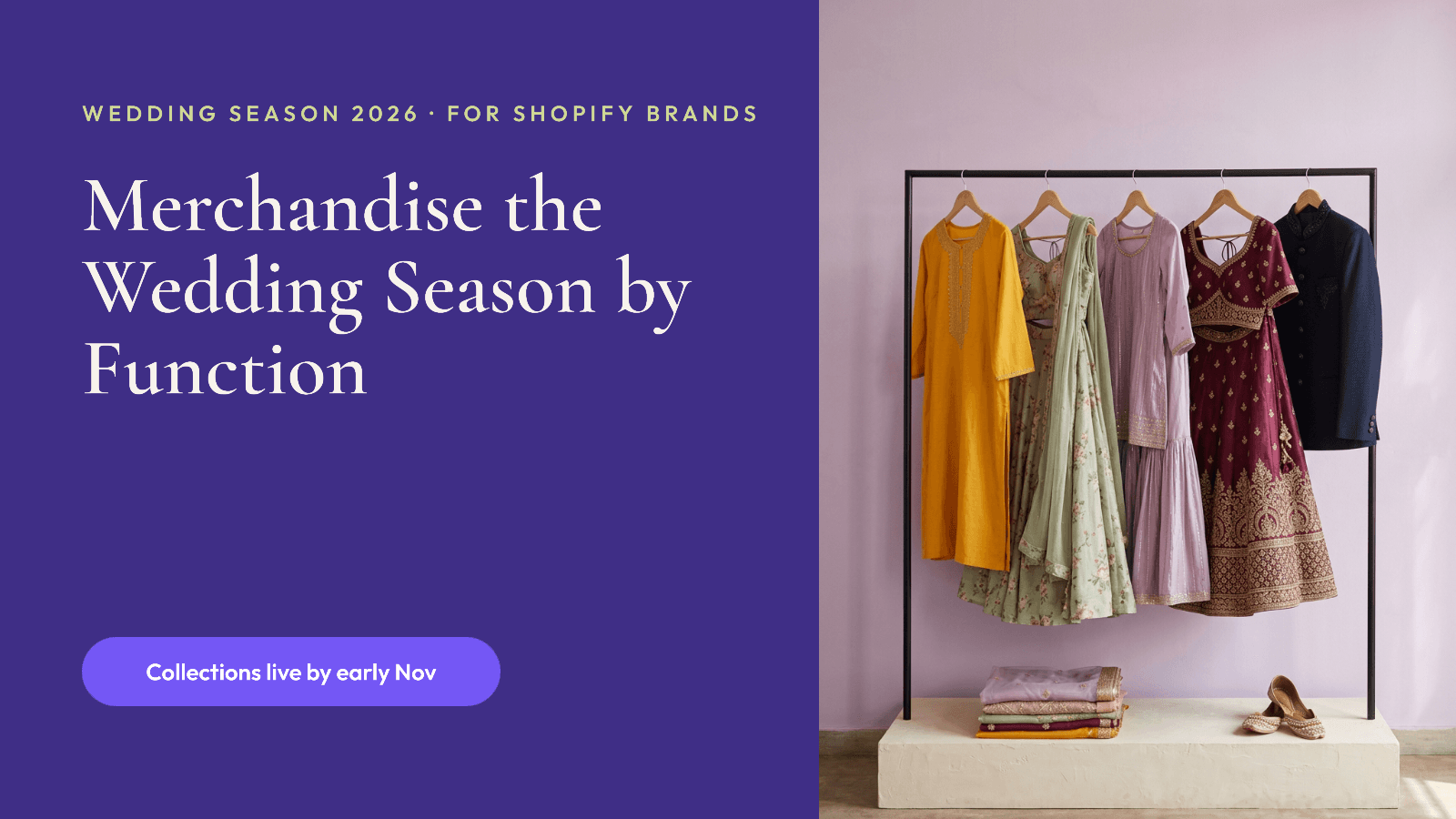
Quick answer: Indian wedding season restarts in late November 2026, with the first auspicious dates around November 21 in published muhurat lists, so ethnic and fusion wear brands on Shopify should have wedding collections live by early November. Merchandise by function (haldi, mehendi, sangeet, ceremony, reception) and by role (bride's family, groom's family, guest), not just by product type. Build complete looks with matching jackets, dupattas and footwear, give honest delivery and alteration timelines, and help shoppers answer the question they actually have: what do I wear to which function.
Wedding shoppers often arrive with a brief rather than a product name: three functions in two days, a sangeet with a theme, a winter ceremony in Jaipur, a cousin's reception in Mumbai. A store that only offers category pages and filters makes them do the styling work themselves. A store that organises the season around functions and roles makes it easy to buy a complete wardrobe in one visit.
This guide covers the 2026 wedding calendar, how to structure wedding collections on Shopify, how to build looks that lift order value, and how to handle sizing, alterations and delivery. For the thinking behind occasion-led stores, see our piece on occasion-based shopping.
The 2026 wedding season calendar
According to SmartPuja's 2026 vivah muhurat list, the first auspicious dates after Chaturmas fall on November 21, 24, 25 and 26, with another cluster on December 2 to 6, 11 and 12. Exact dates vary by panchang, region and community, and many weddings follow their own calendars, so treat these as a planning guide rather than a forecast.
Late October to early November: wedding collections live, styling content published, ads and emails planned around functions.
Early to mid November: a likely busy window for browsing and buying for late-November weddings. This overlaps with Diwali on November 8, so plan stock for both.
Late November to mid December: last-minute guest purchases, alterations and exchanges.
January to February: the season continues for many families, so plan a second drop rather than clearing everything in December.
Organise collections by function, not just by category
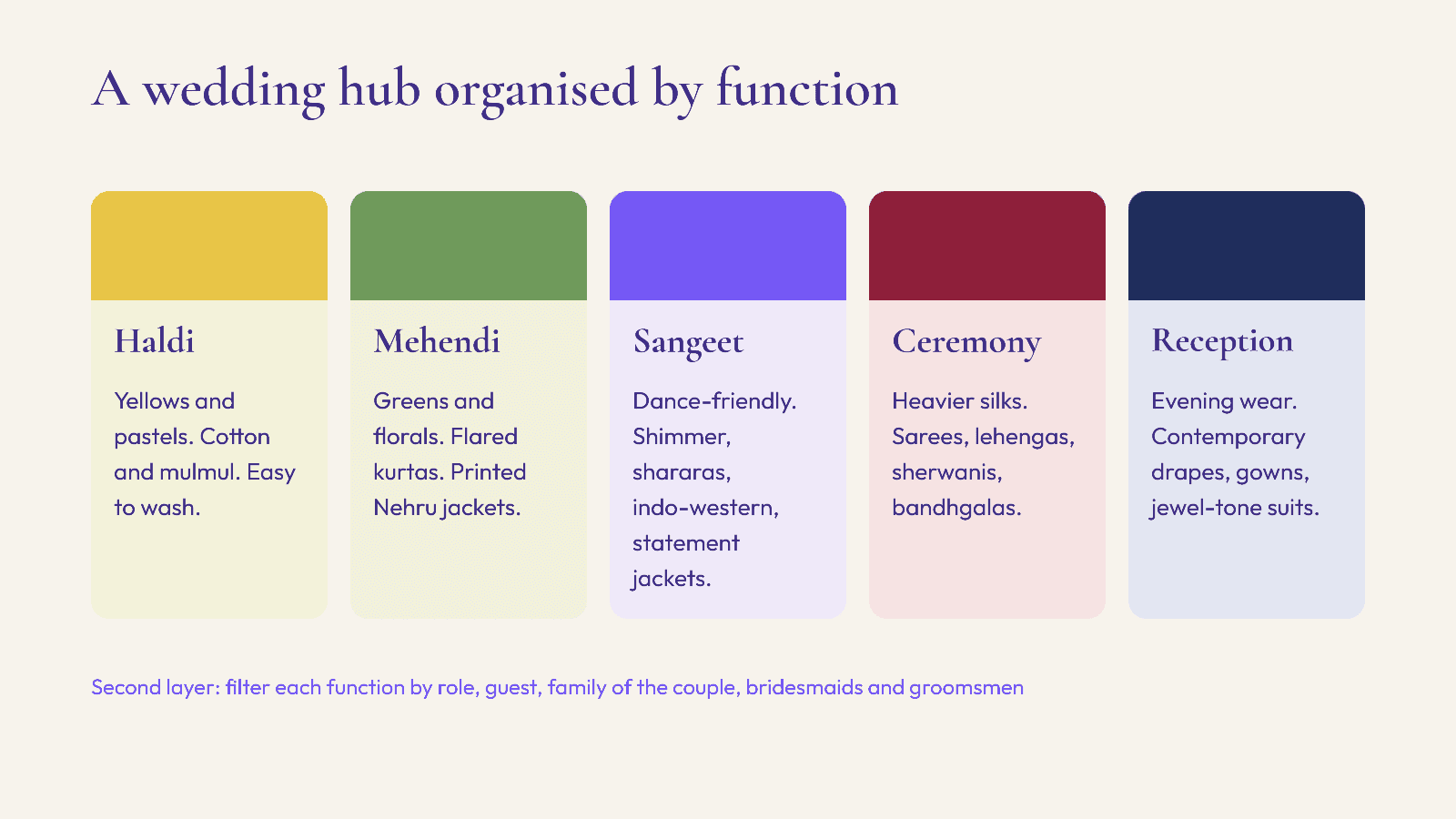
Create a wedding hub with clear entry points by function. Each one answers a specific shopper question.
Haldi: yellow and soft pastel cotton or mulmul sets, easy to wash, comfortable for sitting on the floor.
Mehendi: greens, florals and prints, flared kurtas, lighter lehengas, kurta sets for men with printed Nehru jackets.
Sangeet: dance-friendly silhouettes, shimmer, sharara and lehenga sets, indo-western looks, statement jackets.
Wedding ceremony: heavier silks and traditional silhouettes, sarees, lehengas, sherwanis and bandhgalas.
Reception: evening wear, contemporary drapes, gowns, tuxedo-style bandhgalas and jewel-tone suits.
Then add a second layer by role: bride's or groom's family, bridesmaids and groomsmen, and guests. A guest looking for a reception outfit has a different budget and need from a sister of the bride.
Build complete looks, not product grids
Wedding shopping is outfit shopping. A shopper who finds a lehenga still needs a blouse, dupatta, jewellery and footwear, and a man who finds a kurta still needs a jacket, stole and mojaris.
Shop-the-look bundles: pair each hero piece with two or three matching items, and show the full look on one product page.
Function capsules: a "three functions, one suitcase" capsule built around a single lehenga skirt and three tops or dupattas, or a kurta set with two jackets.
Family coordination: colour-coordinated edits for families who want to match at the sangeet or the haldi.
Show the swaps: shoppers who plan to re-wear an outfit across functions appreciate seeing how one piece changes with a new dupatta or jacket.
As an industry benchmark, Rep AI (2025) reports 25% higher average order value for stores using AI shopping assistants.
Answer the real questions on the product page
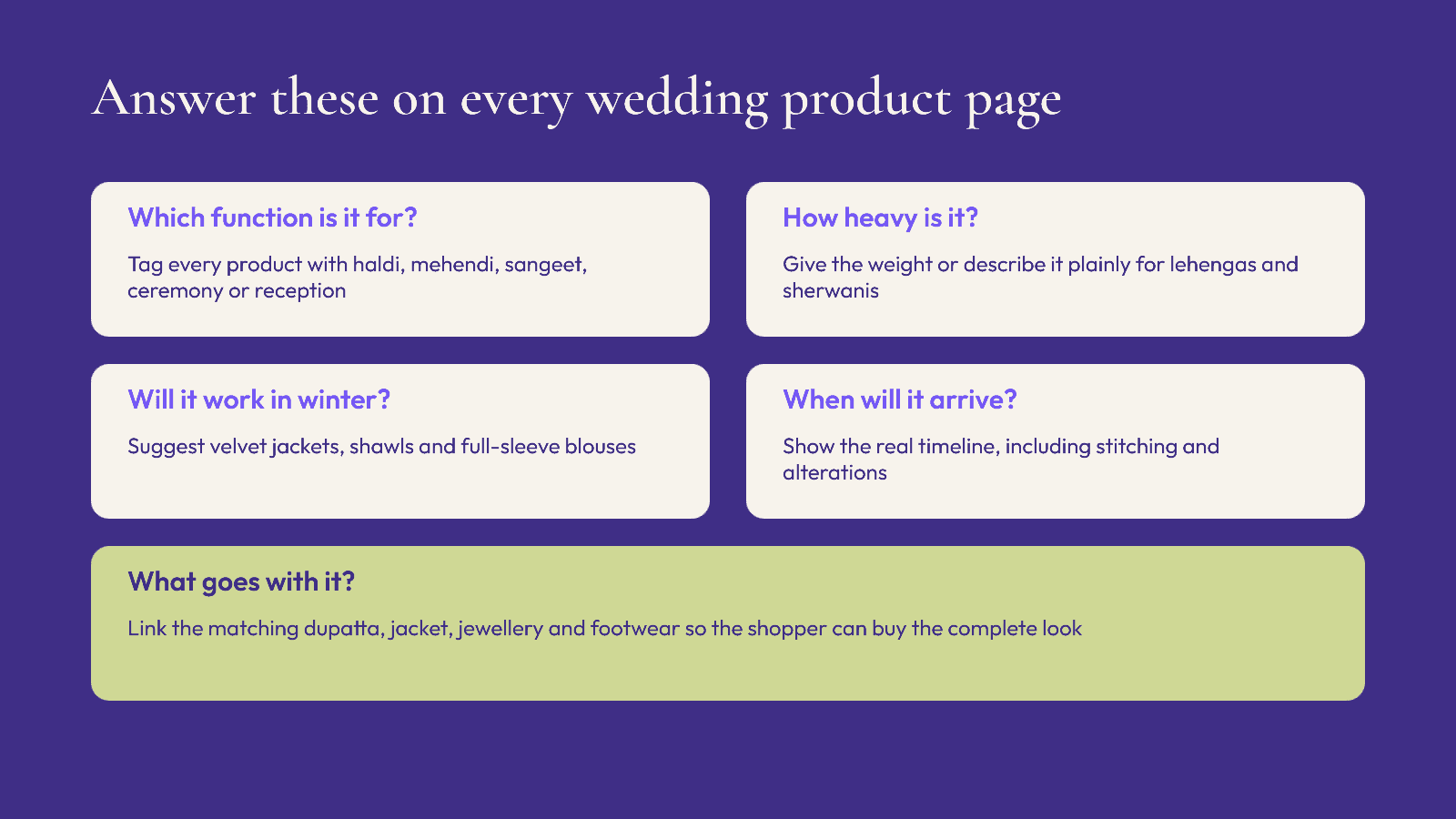
Wedding outfits can carry more anxiety than everyday clothes. Answer the common questions before the shopper has to ask.
Which function is it for? Tag every product with the functions it suits.
How heavy is it? Give the weight or describe it plainly, especially for lehengas and sherwanis.
Will it work in winter? For north Indian winter weddings, suggest layers: velvet jackets, shawls and full-sleeve blouses.
When will it arrive, including alterations? Show the real timeline, not just the shipping time.
What goes with it? Link matching jewellery, footwear and dupattas directly from the page.
Sizing, alterations and delivery
Offer clear size charts for each silhouette. A lehenga, a sharara and a sherwani fit differently.
Make made-to-measure timelines explicit. If a piece takes two weeks to stitch, say so at the top of the page, and show a ready-to-ship alternative.
Set order cutoffs by wedding date. Ask for the event date at checkout or in a pre-purchase chat, and warn the shopper if the timeline is tight.
Plan exchanges for size. Keep core sizes in stock through December so exchanges can be turned around before the function.
Marketing calendar for the season
Content: "what to wear to a sangeet", "winter wedding guest outfits", and "how to re-wear one lehenga" style guides that link to your function collections.
Email and WhatsApp: segment by role and timing. A guest attending a wedding next week needs ready-to-ship; a family member planning for January can wait for made-to-measure.
Social: short videos of one outfit styled three ways can make the swap idea easy to understand.
How Elara helps wedding shoppers decide
Elara for Commerce is an AI shopping assistant for fashion brands on Shopify. A wedding shopper can describe their functions, role, budget and the weather, and Elara builds complete looks from your live catalogue, including matching dupattas, jackets and footwear, with virtual try-on to see the outfit before buying. Your catalogue syncs automatically, every styling conversation is attributed to revenue, and the merchant portal shows which occasions shoppers are asking about, so you can see wedding demand by function. As an industry benchmark, Neuwark (2026) reports a 4x higher conversion rate with AI shopping assistants. Start with a 30-day free trial, or book a demo to see it on your wedding collection.
FAQ
When does the 2026 Indian wedding season start?
For many Hindu families, weddings resume after Dev Uthani Ekadashi. SmartPuja's 2026 muhurat list shows the first dates on November 21, 24, 25 and 26, followed by early December. Dates vary by panchang and community.
When should ethnic wear brands launch wedding collections?
Ideally by early November, so shoppers can browse and order for late-November weddings while Diwali shopping is still happening. A second drop in January helps for the rest of the season.
How should I organise wedding collections on Shopify?
Create a wedding hub with collections by function, such as haldi, mehendi, sangeet, ceremony and reception, and add filters or sub-collections by role, such as guest or family of the couple.
How can wedding wear brands increase order value?
Sell complete looks: pair each hero piece with matching dupattas, jackets, jewellery and footwear, create function capsules, and show how one outfit can be restyled across functions.
How do I handle alterations and delivery for wedding orders?
Show made-to-measure timelines clearly, ask for the event date, warn shoppers when the timeline is tight, and offer ready-to-ship alternatives.
Switching from Name?
· Install in under an hour
· Catalog syncs itself
· Run both, keep the one the holdout proves
Keep reading
Merchandising, Shopify, Strategy
Content
Stylitics automates catalog merchandising. Elara gives every shopper a personal stylist. Here's why that difference changes everything about conversion, retention, and the experience you offer.
Merchandising, Shopify, Strategy
Content
Daydream's B2B search product interprets fashion intent and returns better products. Elara takes that intent and builds a complete, personalized look. Here's why the difference is everything.
Merchandising, Shopify, Strategy
Content
FindMine scales your merchandising team. Elara replaces the need for one by giving every shopper their own personal stylist. Here's the difference — and why it matters for conversion, AOV, and the customer relationship.