
The “You Might Also Like” carousel is on almost every fashion store on Shopify. But the familiar format hides a basic problem: many recommendation experiences are built to answer “What products are related to this product?” when the shopper is asking “What should I actually wear?”
That distinction matters.
Shopify’s native recommendations are not necessarily four static products shown to every visitor. Shopify says automatically generated related products can use products commonly purchased together, similar product descriptions, and related collections, and that recommendations can improve as more order and product data becomes available. Shopify also distinguishes related products—typically substitutes shown in a “You Might Also Like” section—from complementary products such as add-ons shown in a “Pair It With” section. Related recommendations are automatically generated; complementary recommendations require merchant setup.
That architecture is useful for product discovery. It is not the same thing as understanding a shopper’s mission.
Someone looking at a kurta for Diwali may not need four more kurtas. They may need earrings, footwear, a dupatta, and a bag that make the outfit feel finished. Someone shopping for a beach weekend does not simply need products similar to the dress they opened; they need help turning that dress into a look appropriate for where they are going.
The problem with the traditional “You Might Also Like” ecommerce experience is not recommendations themselves. It is recommendations without enough context.
The promise of recommendation carousels was always right
The idea behind a recommendation engine is compelling: help shoppers discover products they might otherwise miss, make browsing easier, and give them natural reasons to add more to their basket. Shopify describes product recommendations as a way to improve discovery and potentially increase store sales, and its 2026 guidance identifies cross-sells and bundles as mechanisms that can increase average order value.
There is also evidence that recommendations can work. Fashion retailer Bandier tested personalized cart-page recommendations against a version with no recommendations. Over a 25-day test, the group seeing recommendations had 10.2% higher AOV and 8.5% higher revenue per visit. In an earlier homepage test, personalized recommendations produced a 9.7% higher conversion rate than best-seller recommendations during the first 18 days.
So the lesson is not “remove every carousel.” It is that generic discovery is a weak substitute for decision support. The strongest recommendation experience understands what the shopper is trying to accomplish—and recommends accordingly.
Why product recommendations don’t convert
Consider what a traditional recommendation system usually knows. It may know the product being viewed, which products were purchased together, product descriptions, collections, categories, price, browsing history, and what similar customers bought. More sophisticated systems combine content-based and collaborative signals. Those are valuable inputs, but they are not necessarily the shopper’s intent.
A SKU does not tell you whether the shopper is:
Going to a mehendi or a work dinner
Dressing for humid weather or an air-conditioned ballroom
Trying to look understated or make a statement
Building a complete outfit or searching for a substitute
Willing to spend another $250 or only another $50
That missing context is especially important in fashion because “similar” and “goes with” are different recommendation problems.
Baymard Institute’s ecommerce usability research makes the same distinction. Alternative recommendations help shoppers find the right version of the product they are already considering. Supplementary recommendations help them finish the package or complete the look. In testing, Baymard observed a shopper who had already found a dress and wanted shoes to complete the outfit, but the store continued showing her other dresses.
The algorithm was not necessarily wrong. The recommendation was answering the wrong question.
Implementation matters almost as much as the algorithm. Baymard found that shoppers tend to ignore cross-sell suggestions when they do not contain enough information to judge relevance, and its benchmark found that many desktop sites failed to provide sufficient product information in their product-page cross-sells. Shoppers also respond poorly when they cannot tell what a recommendation is based on.
When merchants ask why product recommendations don’t convert, the answer often comes down to three mismatches:
Wrong objective: showing substitutes when the shopper is ready for complements
Wrong context: inferring intent entirely from clicks and SKUs rather than asking what the shopper needs
Wrong interface: adding another row of choices when the shopper needs help narrowing them

Shoppers do not always need more options. They need a decision
The standard ecommerce assumption is that greater assortment creates greater opportunity. UX research offers an important counterweight: too many offerings increase the effort required to make a decision and can contribute to analysis paralysis.
Imagine a shopper has already browsed 35 dresses. She opens one she likes. At the bottom of the page, she gets twelve additional dresses. The store has interpreted her product view as “show me more,” while her actual question may be “can I make this work for the wedding?” Those are completely different jobs.
A traditional recommendation carousel expands the consideration set. A styling experience reduces uncertainty.
That is the fundamental difference between a generic Shopify product recommendation engine and an outfit recommendation experience built around intent. Instead of saying, “Here are more SKUs,” the latter can say, “Here is how this item becomes the thing you came here to buy.” The cross-sell stops feeling like a merchandising interruption and starts functioning as an answer.
For fashion brands, “Complete the Look” is not simply a prettier “You Might Also Like.” It is a different recommendation objective for a different moment in the purchase journey.
The AOV math is bigger than it sounds
Average order value is revenue divided by number of orders. Shopify recommends evaluating it over consistent periods and checking that efforts to raise it also improve profitability rather than merely producing bigger baskets through costly discounting.
Consider a fashion store doing 10,000 monthly orders at an $80 AOV. That equals $800,000 in monthly revenue. Holding order volume constant, a 10% AOV lift moves the average basket to $88 and monthly revenue to $880,000.
That is $80,000 in additional monthly revenue, or $960,000 annualized, before considering changes to conversion rate, returns, discounts, gross margin, or order volume. At 50,000 monthly orders and a $100 starting AOV, the same 10% increase represents $500,000 more monthly revenue, assuming order volume remains unchanged.
That is why “How do I increase AOV on Shopify?” deserves more than another upsell pop-up. The target is not to make people spend more at any cost. The target is to give shoppers relevant reasons to buy more of the outfit they are already trying to build.
Bandier’s test is useful because the brand did not merely observe that recommendation-clickers spent more. It tested cart recommendations against no cart recommendations. The treatment produced a 10.2% AOV difference and an 8.5% revenue-per-visit difference during the test period.
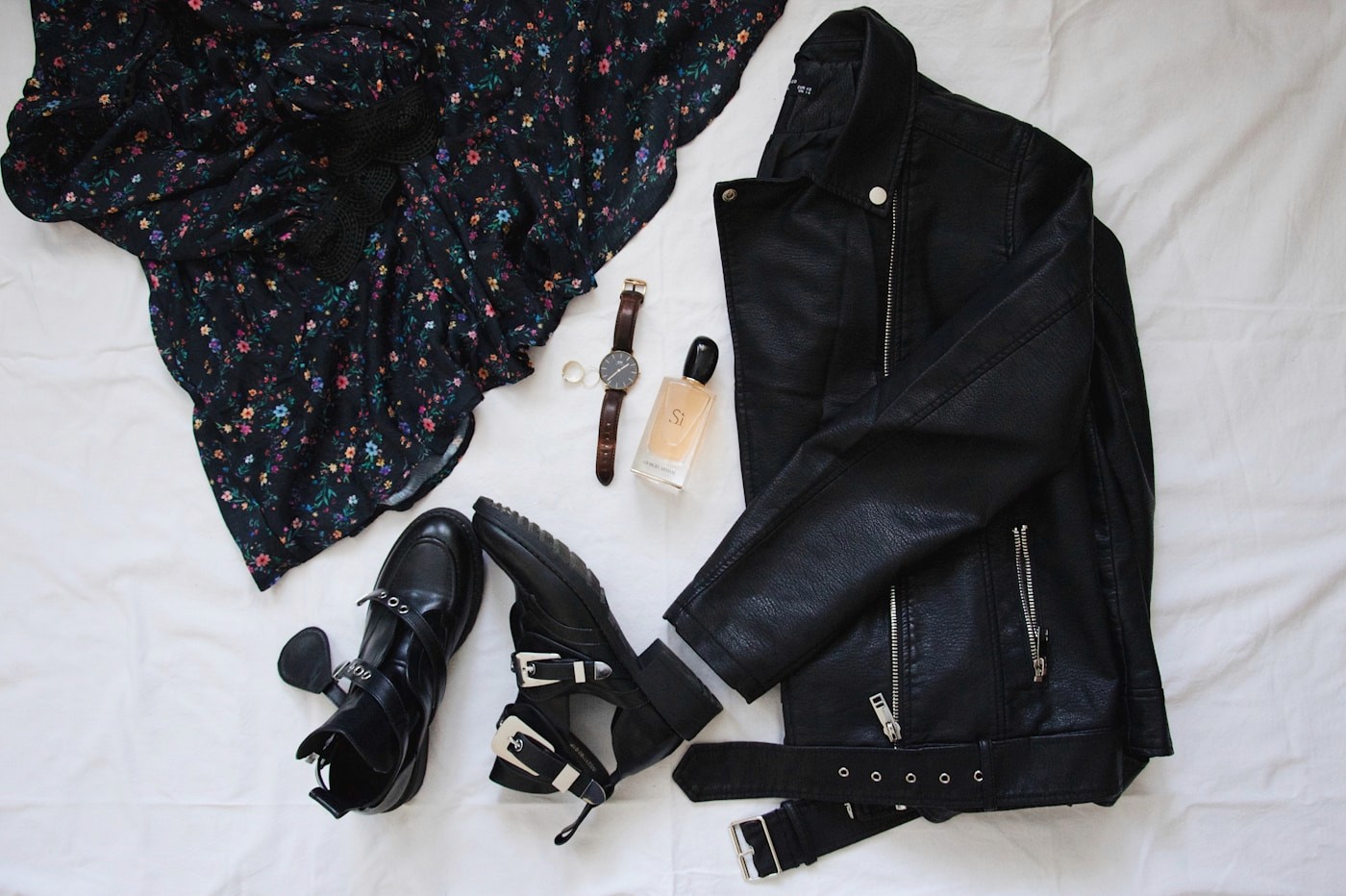
What a conversational styling interface does differently
A conversational stylist starts with something most recommendation engines have historically had to infer: the brief.
Instead of asking a model to reverse-engineer a shopper’s intentions from the fact that she clicked a black dress, the shopper can state the context directly:
I need something for a summer wedding in Jaipur. I want it elegant, not too traditional, and under $400.
Style this kurta for Diwali, but keep the accessories minimal.
I like this dress. Make it work for a beach dinner.
That gives the system explicit signals about occasion, aesthetic, constraints, and budget.
Recent fashion-recommendation research points in the same direction. Personalized outfit recommendation is a different problem from recommending a single SKU: a useful outfit must satisfy both compatibility among the items and consistency with the individual shopper’s preferences. Research on conversational fashion assistants extends that model through multi-round interactions, allowing shoppers to refine a recommendation instead of accepting or rejecting a static result.
The shopper supplies context
Browsing behavior still matters, but it can be combined with direct intent instead of carrying the entire burden of inference.
The output is a look, not a SKU
A styling system can reason across categories: hero piece, layering piece, bottom, shoe, bag, jewelry, or whatever makes sense for the catalog and occasion.
The shopper can refine the result
“Less formal.” “No heels.” “Warmer.” “Keep it below $250.” A multi-turn system turns recommendation into an interaction rather than a one-shot ranking problem.
Personalization can compound
A system can combine explicit preferences with observed browsing and purchase behavior. The interface finally matches the way many people shop fashion: not “recommend item B because I clicked item A,” but “help me put something together.”
What the reported performance numbers say
The available evidence is promising, but fashion brands should distinguish controlled experiments from vendor case studies and engagement-based comparisons.
Bandier with Nosto
Reported outcome: 10.2% higher AOV and 8.5% higher revenue per visit for cart recommendations versus no recommendations. This is stronger evidence because the feature was evaluated as an A/B test.
Rhone with Stylitics
Reported outcome: 39% AOV increase and 10× ROI within the first 100 days. This is a strong commercial case study for outfit-led merchandising, but the public page does not describe a randomized holdout methodology.
Victoria Beckham with Alhena
Reported outcome: 20% AOV increase versus the pre-Alhena period and 10% overall revenue increase. This is a relevant conversational-styling example, but it is publicly presented as a before-and-after comparison rather than a randomized test.
Tally Weijl with Syte
Reported outcome: 9.3% AOV uplift and 4.34× conversion rate. Important caveat: the figures compare shoppers who clicked Syte results with average non-Syte shoppers, so self-selection may contribute to the difference.
Princess Polly with Nosto
Reported outcome: shoppers interacting with recommendations had 21.6% higher AOV and were twice as likely to purchase. This is a useful association, but interaction identifies a more engaged shopper cohort and is not equivalent to randomized causal lift.
Orveon Global
Reported outcome: 10–15% AOV lift across brands after AI merchandising and recommendations. This is a merchant-reported deployment result cited by Shopify.
Taken together, these cases support a more defensible claim than “AI styling guarantees a 20% AOV lift”: better-targeted personalization, complementary recommendations, and outfit-led shopping experiences have produced material AOV and conversion gains, but the incremental result depends heavily on implementation and measurement.
The gold standard for your own store is a randomized holdout. Random assignment helps external factors affect treatment and control groups similarly, making it easier to isolate the feature’s incremental effect.
Do not ask only, “How much do shoppers who use the stylist spend?” Ask, “How much more revenue, AOV, and conversion does the store produce when comparable shoppers are given the styling experience?” That is the number that matters.

How to replace your carousel without rebuilding your store
Replacing “You Might Also Like” does not mean deleting every recommendation widget. A better hierarchy is:
Keep alternatives when shoppers are still deciding on the hero product. A “Similar Styles” module remains useful when a size is unavailable or the shopper is not sold on the current item.
Introduce styling once the question becomes “What goes with this?” That can appear directly on the product page as “Style This,” “Complete the Look,” or “Ask a Stylist.”
Build recommendations from live catalog and variant data. A beautiful recommendation for an unavailable size is not useful; clean product data and inventory awareness are foundational.
Let the shopper supply the missing context. Occasion, vibe, budget, modesty preferences, weather, color constraints, and what they already own turn a generic ranking problem into a defined styling problem.
Measure incrementality. Split comparable traffic between the existing experience and the new one. Track conversion, AOV, revenue per visitor, items per order, gross margin per visitor, and returns. AOV alone can mislead when bigger baskets depend on heavier discounting or lower-margin product mix.
Elara is designed to fit this model as a styling layer on top of an existing storefront. It builds shoppable outfits from the merchant’s own inventory and lets shoppers enter an occasion, vibe, or constraint through an “Ask a Stylist” interface. Elara’s Shopify workflow includes no-code widget configuration, catalog ingestion and enrichment, preview, and publishing. Those implementation details are Elara’s own product claims rather than independently verified deployment benchmarks.
The question does not have to be “How do we rebuild our store around AI?” It can be “What happens if the moment below our Add to Cart button becomes a stylist instead of another carousel?”
See Elara in action
“You Might Also Like” was built for a world in which ecommerce could only infer what a shopper wanted. Conversation changes that.
Instead of showing shoppers more products and hoping one happens to fit their mission, Elara is designed to let them tell the store what they are trying to achieve, then build a complete, shoppable look from the brand’s own catalog.
That is the opportunity for fashion brands trying to increase AOV on Shopify: stop treating every product-page view as a request for another SKU. Treat it as the beginning of an outfit.
See Elara in action and turn “You Might Also Like” into “Here’s how to wear it.”
Book a demo now.